In this guide
You've noticed a dark patch on a wall. Maybe paint peeling at the skirting, maybe a tide mark, maybe spots of mould around a window. The first instinct is to find someone who deals with damp. They turn up with a meter, press it against the wall, and quote you £1,500 to inject a new damp-proof course.
Sometimes that's the right diagnosis. Oftenit isn't. In 2022, the Royal Institution of Chartered Surveyors, Historic England and the Property Care Association issued a joint position statement specifically because rising damp is so widely misdiagnosed across the UK — and the consequence is homeowners paying for treatments that don't work because they were aimed at the wrong problem. RICS' own arbitration records suggest up to half of damp disputes come from this kind of misaligned repair.
This guide is for the Oxfordshire homeowner who's seen a patch and wants to work out what's going on before anyone with a clipboard arrives.
The three types, in plain English
There are three different things people lump together as "damp". They have different causes, different tells, and very different fixes. Misidentifying which one you have is the single biggest reason damp problems get expensive.
1. Condensation (most common)

Warm air holds more moisture than cold air. When that warm, damp air hits a cold surface — a single-glazed window, an external wall behind a wardrobe, the corner of a north-facing bedroom — the moisture drops out as droplets. Over time, those droplets become black spotty mould.
Condensation is by far the most common cause of damp problems in UK homes, especially between October and March. It's also the cheapest to fix, because it isn't actually a building defect — it's a ventilation and heating problem.
What it looks like: black spotty mould, often around windows, in corners, behind furniture, on cold external walls. Wet windows in the morning. Worse in winter. Worse in rooms where moist activities happen — kitchens, bathrooms, bedrooms with a clothes airer.
2. Penetrating damp
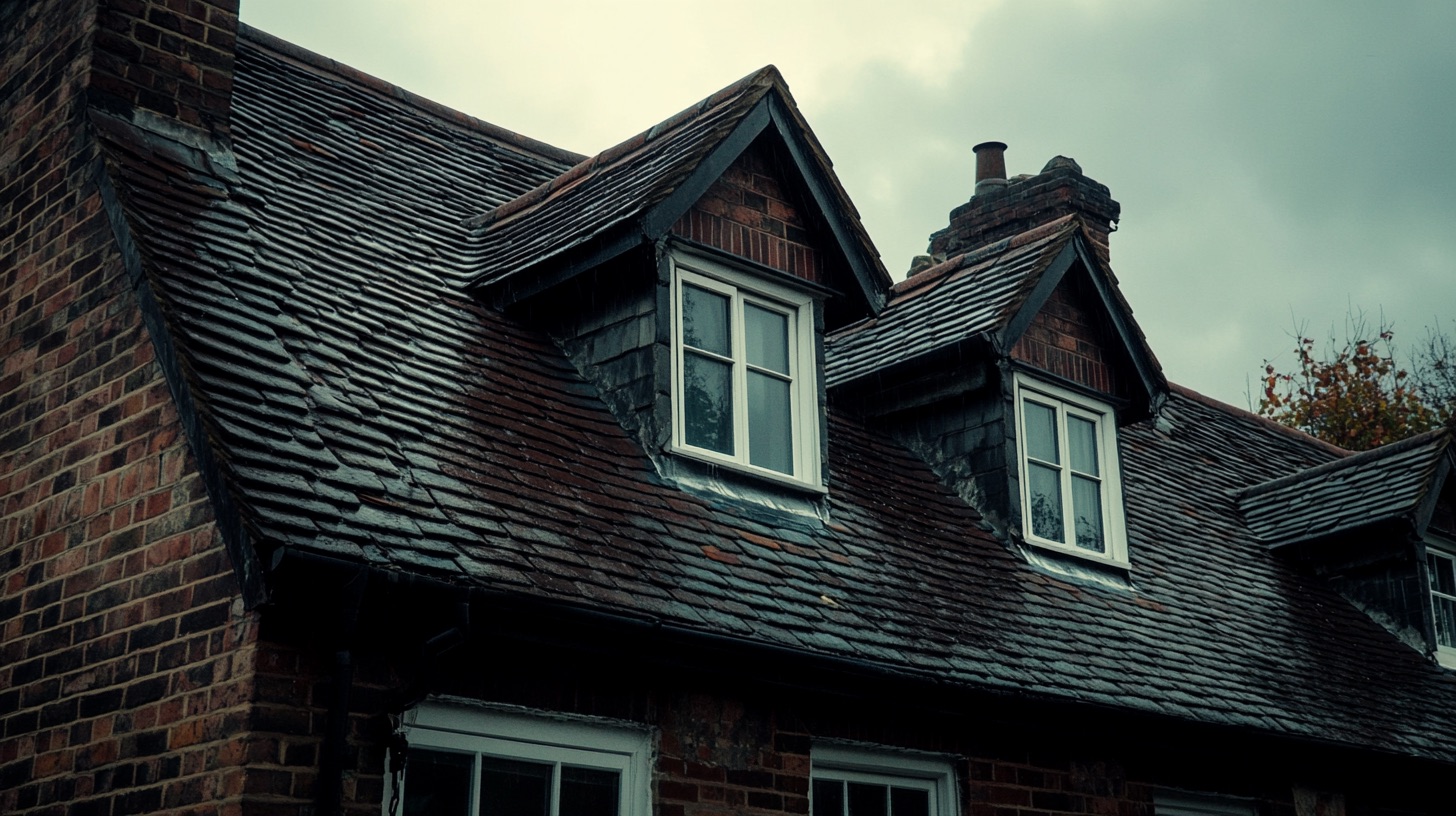
Water finding its way through the building fabric from outside in. A cracked render. A failed gutter that's spilling onto a wall. A pointing repair that's let water in. A roof tile that slipped six winters ago. A neighbour's flashing that funnels rain at your gable.
Penetrating damp can appear at any height. That's a key tell: if you've got damp halfway up a wall, between two windows, or near a chimney breast, it's almost certainly water coming in from somewhere outside that point. Not rising from the ground.
What it looks like: damp patches that don't follow ground level. Often worse after heavy or wind-driven rain. May come and go depending on weather. External evidence: cracked render, blocked or leaking gutters, missing pointing, slipped tiles, a chimney without a cowl.
3. Rising damp (genuinely rare)
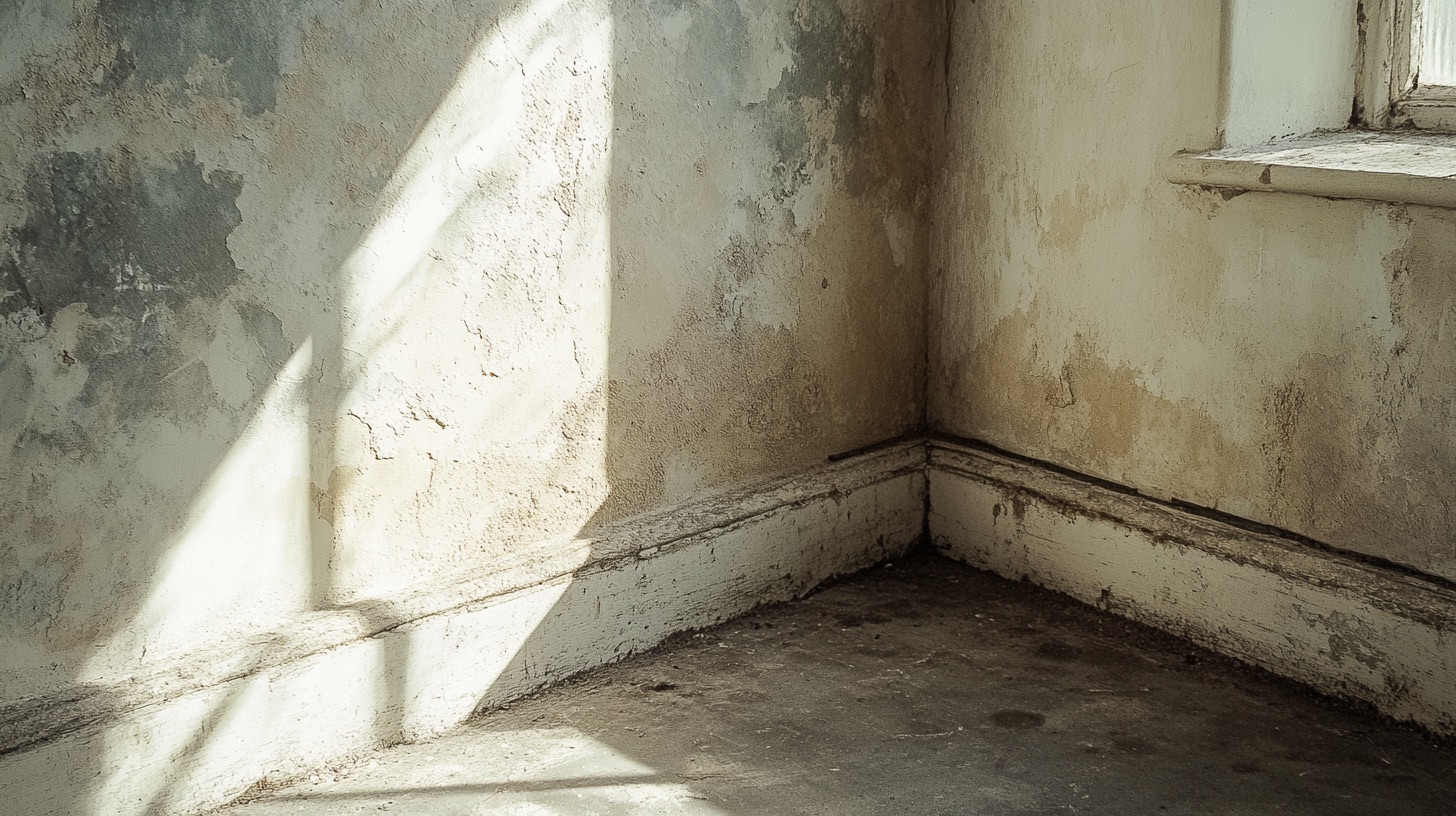
Groundwater drawn upwards through porous masonry by capillary action. Real rising damp does exist, but it's much rarer than the people selling damp-proofing treatments would like you to think. It happens when a building's original damp-proof course has failed or never existed, and conditions allow moisture to wick up.
What it looks like — and this matters: rising damp always starts at ground level, and almost never goes higher than about a metre. It typically leaves a horizontal tide mark where the moisture stops, and white powdery salt deposits (efflorescence) on the wall. Damp above a metre, or damp that isn't continuous along a ground-floor wall, almost certainly isn't rising damp — whatever a contractor tells you.
The big one to remember
If your damp patch is above a metre from the floor, or appears at the top of a wall, or is around a window, or only happens in winter — it is very unlikely to be rising damp. A contractor who diagnoses rising damp without ruling out condensation and penetrating damp first is either incompetent or selling you something.
A test you can do tonight
Before anyone with a clipboard arrives, you can rule out — or rule in — condensation with about £2 of kitchen foil and 48 hours of patience. This is sometimes called the foil test, and it's accurate enough that even good surveyors use it as a starting point.
The kitchen-foil test
- Cut a square of aluminium kitchen foil, roughly A4 size.
- Tape it tightly to the damp area of wall, with the tape sealing all four edges. You're trying to make the foil a sealed lid against the wall.
- Leave it for 24 to 48 hours.
- Peel it off and look at both sides.
If the moisture is on the room side (the side that was facing the air), the damp is coming from the air — that's condensation. If the moisture is on the wall side (the side that was stuck to the wall), the damp is coming from within the wall — either rising or penetrating.
It isn't a complete diagnosis. It won't tell you which kind of wall-borne damp you have. But it will save you from being sold a chemical injection treatment when what you really need is a bathroom extractor fan.
Why so many damp problems are misdiagnosed
Two things conspire against an honest diagnosis: the business model of "free damp surveys", and a piece of equipment called a damp meter.
The free damp survey is offered by contractors who only get paid if they find something to treat. They have no incentive to tell you it's condensation, because they can't sell you a fix for that. The Property Care Association and RICS have both warned about this for years.
The damp meter — that little device with two pins they press into the wall — is the second issue. These meters are accurate for measuring moisture in timber, which is what they were designed for. Pressed against masonry or plaster, they often give high readings from conductive materials in the wall (salts, metals, certain old plasters), not actual moisture. So a contractor can wave a meter around an old Oxfordshire stone or solid-brick wall, get a high reading from the wall's own chemistry, and produce a "rising damp" diagnosis that is essentially measurement error.
The RICS, Historic England and PCA joint position statement on damp diagnosis is explicit about this: a damp meter alone is not a diagnosis. A proper assessment looks at the whole building, considers ventilation, weather exposure, building fabric and recent works, and only then weighs up what kind of moisture you're dealing with.
In older Oxfordshire housing stock — solid-wall stone cottages, Victorian terraces, anything with lime mortar — damp meter readings are particularly unreliable. The walls were never meant to be sealed; they were meant to breathe. Treating them like modern cavity walls is a fast route to making things worse.
What a proper diagnosis looks like
If your damp is bad enough that the foil test, common sense and a tour around the outside of the building haven't given you an answer, get an independent damp survey. Independent is the word that matters: somebody who is paid by you to diagnose the problem, not somebody who is paid by selling you a treatment.
A proper damp surveyor will:
- Walk around the outside of your house first, looking at gutters, downpipes, render, pointing, ground levels, ventilation and roof.
- Ask about your heating, cooking, drying habits and recent works.
- Use a damp meter as one input, not the only one. They may also use a carbide-bomb test or a calcium-carbide moisture test for masonry, which is much more reliable than a pin meter.
- Give you a written report that explains the cause, not just the symptom.
- Be willing to tell you the answer is "ventilation and a £40 extractor fan" if that's what it is.
A surveyor who diagnoses rising damp without checking your gutters, asking about your habits, and ruling out condensation is not doing their job. Walk away.
What it should cost — and what it shouldn't
The figures below are 2026 averages. They'll vary by property size and access, but use them as a sanity check. If someone is quoting you well above these numbers — or pushing chemical injection without a clear written diagnosis — get a second opinion.
| Work | What you should pay |
|---|---|
| Independent damp survey | £150–£400, depending on property size |
| Extractor fan fitted (condensation) | £150–£350 including parts |
| Positive Input Ventilation system (whole house) | £500–£1,000 fitted |
| Gutter or pointing repair (penetrating) | £150–£600 for a localised fix |
| Chemical injection DPC (rising damp, terraced) | £500–£1,200 for injection; £1,500–£2,500 with replastering |
If your surveyor identifies condensation, do not pay for a DPC injection
Injecting a damp-proof course into a wall that doesn't need one will not fix condensation, will not stop mould returning, and will not be reversible. It's also expensive enough that the regret tends to last years.
Who to call, in what order
Most damp problems don't need a damp specialist as the first call. They need a building surveyor, a roofer, a plumber, or just a competent handyman. Try in this order:
- Check the outside first. Free. Look at the gutters above where the damp is. Check downpipes. Look at pointing, render, flashing, and ground levels. Many penetrating damp problems are visible from a step ladder and fixable by a local roofer or general builder.
- Run the foil test indoors. Two days, near-zero cost. If it reads as condensation, the next call is to an electrician for an extractor fan or a heating engineer about ventilation, not a damp specialist.
- If still unsure, get an independent damp survey. Not a free one offered by a damp-treatment company. Pay the £200–£400 to someone whose only output is a diagnosis.
- Only then call a damp specialist — and only if the independent survey concluded that's what you need. If the fix involves replastering after treatment, you'll also need a plasterer.
For Oxfordshire homeowners specifically
A lot of the housing stock around Oxford, Witney, Banbury and the smaller villages is solid-wall, lime-mortared, and pre-cavity-wall construction. These buildings handle moisture differently from modern brick-and-block houses, and they are particularly vulnerable to bad damp advice. If you live in a period property and a contractor recommends sealing it up with cement render or injecting chemicals into the walls, get an independent second opinion from somebody with experience in traditional buildings before agreeing to anything. Historic England's guidance on damp in traditional buildings is a free and useful starting point.
The short version
If you do nothing else: rule out condensation first, check the outside of the building, and don't pay for a damp-proof course without an independent diagnosis. Most damp on most UK walls is not rising damp. The cheapest fixes — better ventilation, a clear gutter, a single roof tile back in place — are also the ones least likely to be offered to you by someone selling damp-proofing.
Finding a tradesperson you can trust
TradesAround lists Oxfordshire builders, roofers, plasterers and damp specialists, checked against Companies House. We don't charge per lead and we don't sell "trusted trader" badges. Search by trade and town to compare a few independent specialists in your postcode, or jump straight to local damp specialists if you've already ruled out the simpler fixes.
References: RICS consumer guide to damp and mould; RICS / Historic England / Property Care Association Joint Position Statement on moisture in traditional buildings (2022). This guide is general information, not a survey of your specific property. If in doubt about a damp problem, get an independent professional assessment.