Most people can picture a gas safety check, or an MOT. Far fewer have ever had the electrical equivalent — even though the wiring behind the walls is often older than the boiler, works harder than anything else in the house, and is asked to carry loads the people who first installed it never imagined. An Electrical Installation Condition Report, an EICR, is that missing check: a qualified electrician's assessment of whether the fixed wiring in your home is safe to keep using. In a rented home it is required by law every five years. In one you own, it is the check almost nobody books until they are selling, buying, or something has already gone wrong.
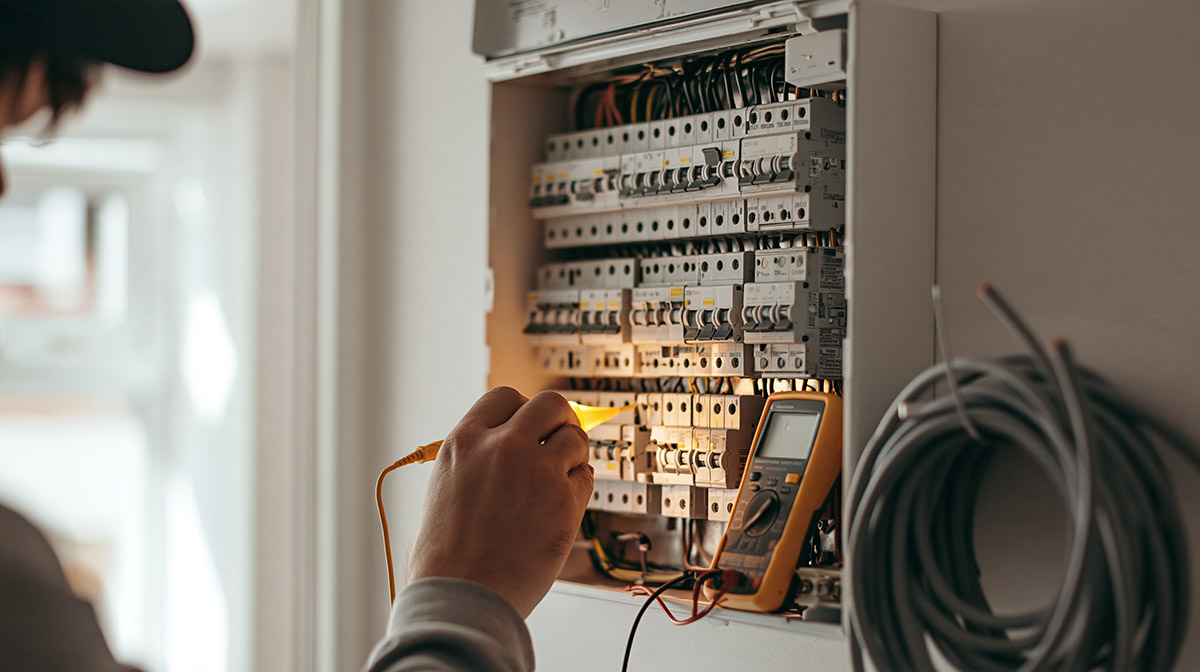
Two things make this a good moment to understand it. The first is a rule change on 1 October 2026 that tightens who is allowed to carry the inspection out — which matters, because an EICR is only ever as good as the person signing it. The second is that Oxford has one of the older and more heavily rented housing stocks in the country, which is precisely where ageing wiring and worthwhile inspections meet. This guide covers what the report examines, how to read it, when you need one, and how to be sure the person doing it is genuinely qualified rather than merely confident.
What an EICR actually is — and what it is not
An EICR inspects and tests the fixed electrical installation: the wiring, the consumer unit (what most people still call the fuse board), the sockets, switches, light fittings and the circuits that tie them together. It is a periodic inspection — a health check of an installation already in use — as opposed to the certificate you are given when new work is first installed and energised.
What it does not cover is anything you plug in. Your washing machine, kettle and extension leads are not part of the fixed installation; testing those is PAT, a separate exercise altogether. An EICR is about the parts of the system you cannot see and never think about.

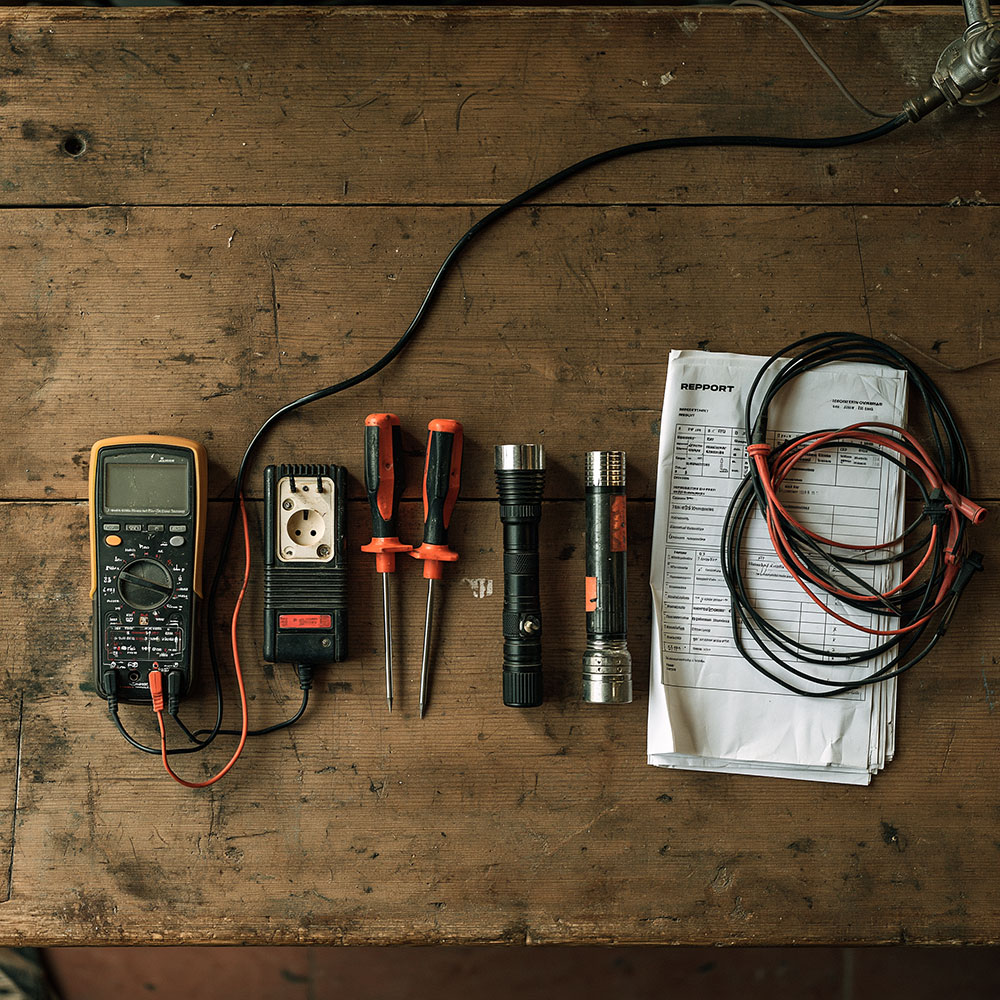
A registered electrician works through a mix of visual inspection and instrument testing — checking earthing and bonding, the condition of cables and connections, whether each circuit is protected by the right device, and whether anything has been altered, extended or quietly overloaded over the years. At the end you get a report that reads either satisfactory or unsatisfactory, followed by a list of coded observations. Those codes are where nearly all the useful information sits, and they are simpler than they look.
Why it matters more in an older home
The case for an inspection scales with the age of the wiring and how much has changed since it went in. A 2015 new-build in Bicester with an untouched modern consumer unit is a very different proposition from a Victorian terrace in Jericho, or a 1930s semi in Headington that has absorbed forty years of extensions, part-rewired kitchens and a shower fitted by someone who may or may not have known what they were doing.
The things that tend to surface in older Oxfordshire homes are consistent:
- Ageing fuse boards — rewireable fuses, or an early plastic consumer unit with no RCD (residual current device), the fast-acting switch that cuts the power in a fraction of a second when it senses a fault leaking to earth. The RCD is the single thing most likely to stop a fault becoming a shock or a fire, and the oldest boards simply do not have one. Electrical Safety First has plain guidance on what modern protection should look like.
- Tired cabling — in the oldest installations, rubber-, fabric- or lead-sheathed cable that grows brittle with age, round-pin sockets, or lighting circuits with no earth.
- Loads the wiring never anticipated — electric showers, immersion heaters, induction hobs and, increasingly, heat pumps and EV chargers, all drawing far more than a mid-century circuit was designed to carry. They are the same modern demands that have many people rethinking their heating entirely, and they land on wiring that predates all of it.

None of this means an old house is dangerous — plenty of period wiring is perfectly sound. It means an old house is worth checking, because the failure modes are invisible right up until they are not.
Reading the report: C1, C2, C3 and FI
The heart of an EICR is a list of observations, each given a code. Learn four of them and you can read almost any report.
| Code | What it means | What it means for you |
|---|---|---|
| C1 | Danger present. Risk of injury. | Something live or exposed that should not be. Immediate action needed — a good electrician will often make a C1 safe on the spot. |
| C2 | Potentially dangerous. | No immediate danger, but a fault that could become one. Urgent remedial work needed. Missing RCD protection or poor earthing often lands here. |
| C3 | Improvement recommended. | Not dangerous and does not fail the report. Bringing it up to current standards would be sensible, not urgent. |
| FI | Further investigation required. | Something needs a closer look before it can be judged. Not a verdict in itself. |
The overall result follows from those codes. An installation is recorded as unsatisfactory if it carries any C1, C2 or FI; a report with only C3s is satisfactory. So "unsatisfactory" does not mean the house is about to burn down — it means at least one thing needs putting right before the installation can be signed off as safe. Equally, a satisfactory report dotted with C3s is quietly telling you where the wiring is starting to show its age.
When you actually need one
For rented homes, this is settled law. Since 2020, landlords in England must have the electrical installation inspected and tested at least every five years and give tenants a copy of the report, under the Electrical Safety Standards in the Private Rented Sector Regulations. Local authorities can impose financial penalties — running to tens of thousands of pounds — where a landlord does not comply; the GOV.UK guidance for landlords, tenants and local authorities sets out the detail. This matters more in Oxford than in most places: a large share of the city's housing is rented — students, professionals, a substantial HMO market — so a great many local homes are already on a five-year cycle whether anyone thinks about it or not.
For a home you own, there is no legal requirement, but the widely used recommendation is an inspection at least every ten years, and at change of occupancy — which is to say, when you buy. Older installations may warrant a shorter interval. Ten years is best read as a maximum rather than a target: if you have bought a period home and nobody can tell you when it was last inspected, "not since we moved in" is reason enough. NICEIC, one of the main electrical registration bodies, publishes guidance on inspection intervals for both rented and owner-occupied homes.
The change coming in October 2026
Until now, an experienced electrician could carry out periodic inspection largely on the strength of that experience. From 1 October 2026 that changes. The Electrotechnical Assessment Specification — the industry standard the main registration bodies use to judge competence — closes the experience-only route for periodic inspection and testing. From that date, an electrician assessed for this work is expected to hold a recognised Level 3 inspection-and-testing qualification (the City & Guilds 2391-52 or an equivalent), alongside documented experience and current knowledge of the wiring regulations, BS 7671. NICEIC has set out what the changes mean for the trade.
In plain terms, the bar for who is deemed competent to sign an EICR is going up. A homeowner has no exam to sit and no form to file — but there is a reason to care all the same. An EICR is a professional judgement recorded on a document, and its worth depends entirely on the competence of the person making it. A cut-price inspection from someone working at the edge of their qualifications was always a false economy; after October it may also be one that a properly qualified eye — a buyer's surveyor, say, or an insurer after a fire — regards as not worth much. The point was never to pay for an inspection. It was to pay for a competent one.
How to check your electrician is genuinely qualified
Electrics work differently from gas. Anyone working on gas must, by law, be on the Gas Safe Register — one legal list, easy to check. There is no single equivalent you must be on to call yourself an electrician. What exists instead is a system of registered competent person schemes. Under Part P of the Building Regulations, certain electrical work in a home must either be notified to building control or be carried out by an electrician registered with an approved scheme, who can then self-certify that the work meets the regulations.
So the checks worth doing are straightforward:
- Confirm scheme registration. NICEIC, NAPIT and others run competent person schemes, and each publishes a directory you can search. A logo on a van or a website proves nothing — logos are copied all the time. The register is the proof, so look the business up on the scheme's own site.
- Ask about the inspection qualification. For an EICR specifically, ask whether the person carrying it out holds a current inspection-and-testing qualification — the 2391-52 or equivalent, the very thing October's change is about. A competent inspector will answer without hesitation.
- Expect a proper document. A real EICR comes on the standard model report form, signed, with the inspector's name and scheme registration number. A formal report, not a text message summary.
- Check the business exists. A quick Companies House search tells you whether the limited company quoting you is real, how long it has traded and whether it files accounts.
Finding an electrician you can actually stand behind
TradesAround lists Oxfordshire electricians checked against Companies House, with a link on each profile to the NICEIC register so you can confirm a registration yourself, and reviews left on TradesAround are checked before they appear — no per-lead fees, no bidding wars. If your inspection is due, or a report has thrown something up, you can search by trade and town here.
What it costs — and what remedial work should not
Prices vary with the size of the property, the number of circuits and how easy the installation is to get at, but the rough shape of the market helps you sense-check a quote. The figures below are broad 2026 ranges — a guide, not a quotation. Always get itemised written prices for your own home.
| Job | Typical range | Worth knowing |
|---|---|---|
| EICR, typical 3-bed home | £150–£300 | More for larger homes, more circuits or awkward access. After October, a suspiciously cheap inspection is worth a second thought. |
| Replacing a consumer unit (fuse board) | £450–£900 | Often the fix for "no RCD protection". A common, legitimate upgrade — not a con. |
| Adding RCD / RCBO protection | £150–£350 | Sometimes a targeted alternative to a whole new board. |
| Rewiring a 3-bed home | £4,000–£7,500+ | Big and disruptive. Rarely the answer to a handful of C2s, and almost never to C3s alone. |
The pattern to watch is simple: the inspection is cheap, and the money is in the remedial work it recommends. Most findings are proportionate — a board upgrade here, better earthing there, a circuit brought up to standard. Be cautious when a report with mild findings arrives with a quote for a full rewire attached, or when the firm that found the faults is the only one you allow to price the fix. As with any trade, a second opinion on a large recommendation is time and money well spent.
The short version
An EICR is a qualified check of the fixed wiring in your home — the part you cannot see and never think about. It earns its keep most in older, altered and heavily used homes, which describes much of Oxford's stock. Learn the four codes: C1 is danger now, C2 is danger soon, C3 is an improvement, FI needs a closer look — and remember that "unsatisfactory" means "put one thing right", not "condemn the house". Rented homes need an inspection every five years by law; owned homes are recommended one every ten, and whenever you buy. From October, the rules on who is qualified to carry one out tighten — so, more than ever, check that your electrician is registered and holds the inspection-and-testing qualification, and treat a cheap inspection with a big rewire pinned to it with exactly the caution it deserves.