Flooding guide · Abingdon
Flooded in Abingdon: what to do and who to call
Last reviewed:
If water has come into your home, this page takes you from the first hours to booking repairs, in the order that matters. Every safety point comes from official advice, listed under Sources at the foot of the page.
The short version
- 1. Stay out until the emergency services say it is safe. Leave the gas, electricity and water off.
- 2. Get the electrics and the gas checked before anything is switched back on.
- 3. Ring your insurer before you clear up. Photograph the damage and the water line.
- 4. Clean up in boots, gloves and an apron. Floodwater may contain sewage.
- 5. Dry the house properly before plastering or decorating.
- 6. Book repairs in order, and do not hire anyone who knocks on the door.
In this guide
- Before you go back in
- Step 1: Get the electrics and gas checked
- Step 2: Tell your insurer before you clear up
- Step 3: Clean up safely
- Step 4: Dry the house out
- Step 5: Repairs, in order
- People who knock on the door
- Help with the cost
- Who to call in Abingdon
- Flooding in Abingdon
- Make the repair count
- Common questions
Before you go back in
- Check with the emergency services that it is safe to return to your home.
- Do not turn on the water, gas or electricity. Get the utility company or a qualified engineer to check they are safe first.
- If you are still at home and a flood warning is in force, turn off the gas, electricity and water if it is safe to do so. Do not touch an electrical switch if you are standing in water.
- Floodwater may contain sewage and hide rubbish and debris.
- Do not use tap water if its colour, taste or smell has changed.
- Water that got into downstairs sockets can make the whole electrical system unsafe, so do not assume the upstairs sockets are fine.
Step 1: Get the electrics and gas checked
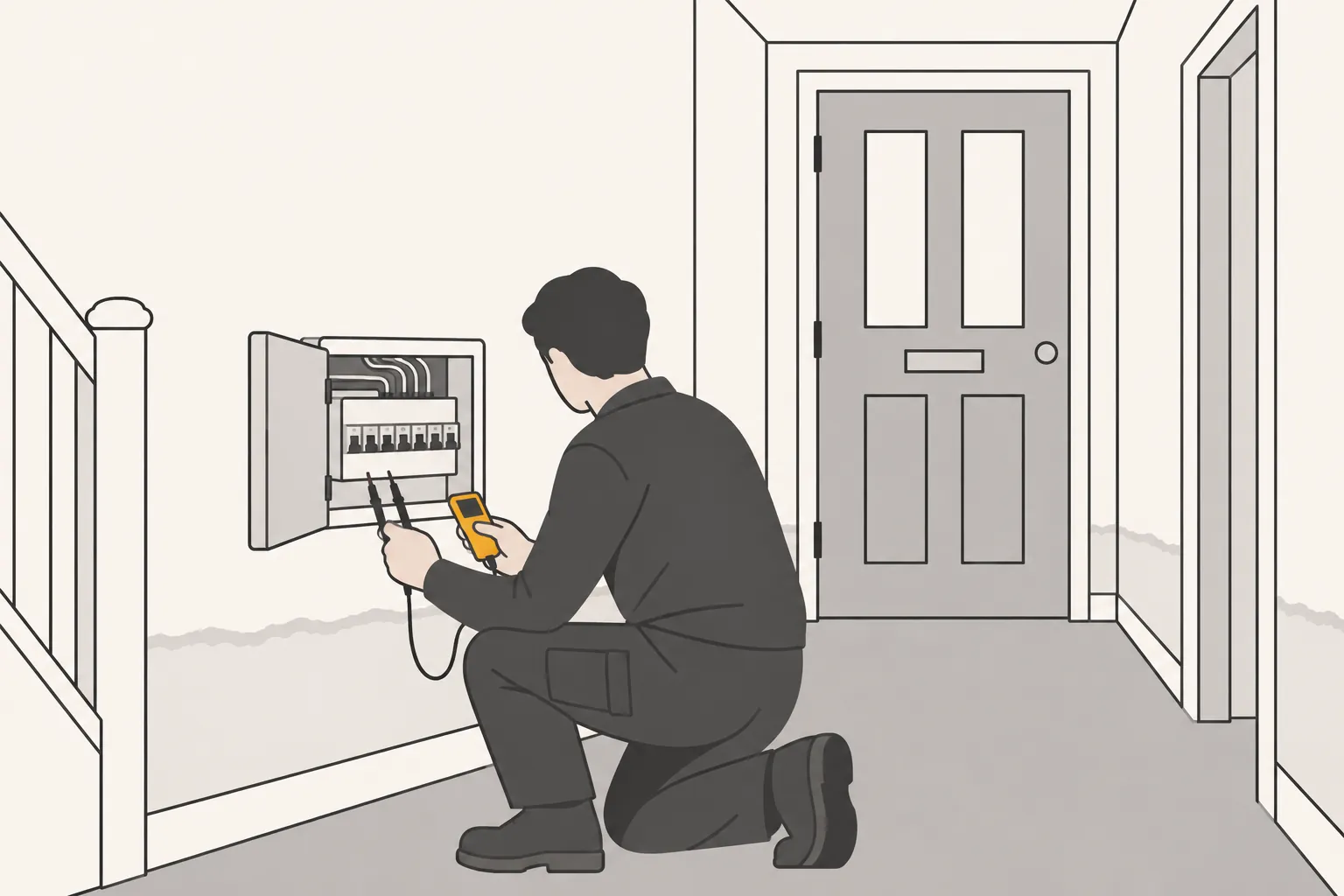
Electrics
Switch the electricity off at the consumer unit (the fuse box) only if it is safe to do so. Avoid using any mains-powered appliance until a registered electrician tells you it is safe, and do not try electrical repairs or rig up temporary supplies yourself.
Anything electrical that got wet should not be plugged in until it has dried out thoroughly and a qualified electrician has inspected it.
Once the damage has been assessed, NICEIC advises getting an Electrical Installation Condition Report (EICR) to set out the repairs needed. All electrical work in a home must meet Part P of the Building Regulations; an electrician in a competent person scheme can certify their own work.
Check the electrician yourself
Search a company's name on the Registered Competent Person Electrical register, or look the electrician up with NICEIC or NAPIT.
Gas and heating
Get in touch with a Gas Safe registered engineer before the gas supply goes back on. They will make sure the pipework is not full of water, and the boiler should have a full safety check. Gas or oil central heating should be checked by a qualified engineer before you turn it on.
Anyone employed to work on gas appliances in a home must be a Gas Safe registered engineer.
Check the gas engineer yourself
Search the Gas Safe Register with the engineer's 7-digit licence number or the business's trading name, or call 0800 408 5500. Ask to see their Gas Safe ID card: the back lists the work they are qualified to do.
Step 2: Tell your insurer before you clear up

- Contact your insurer straight away to start your claim.
- Before you clear anything, take photos of the damage and the flood water line, and ask the insurer what you can move and throw away.
- Keep damaged carpets, furniture and belongings until the loss adjuster agrees they can go. You are not expected to keep anything that is a health hazard.
- Temporary emergency repairs to stop the damage getting worse are fine, but speak to your insurer first and keep the receipts.
- If you have to move out and have adequate buildings or contents insurance, your insurer will offer to provide or pay for suitable alternative accommodation.
- A loss adjuster works for the insurance company. A loss assessor represents you and charges a fee.
- After major flooding, it may take a year or longer for a home to be fit to live in again. Most people who have to leave are back within six to nine months.
No insurance
Contact your local Citizens Advice, which can help you apply for financial help. The council may be able to tell you about grants or charities that help with repairs. The National Flood Forum's helpline is 01299 403 055.
Renting
Your landlord is responsible for repairs to your home after flood damage, but not for your belongings.
Unhappy with the claim
Complain to the insurer first. If you do not get a final response within eight weeks, or you are unhappy with it, you can take the complaint to the Financial Ombudsman Service. It is free, and you have six months from the date of the final response.
Step 3: Clean up safely
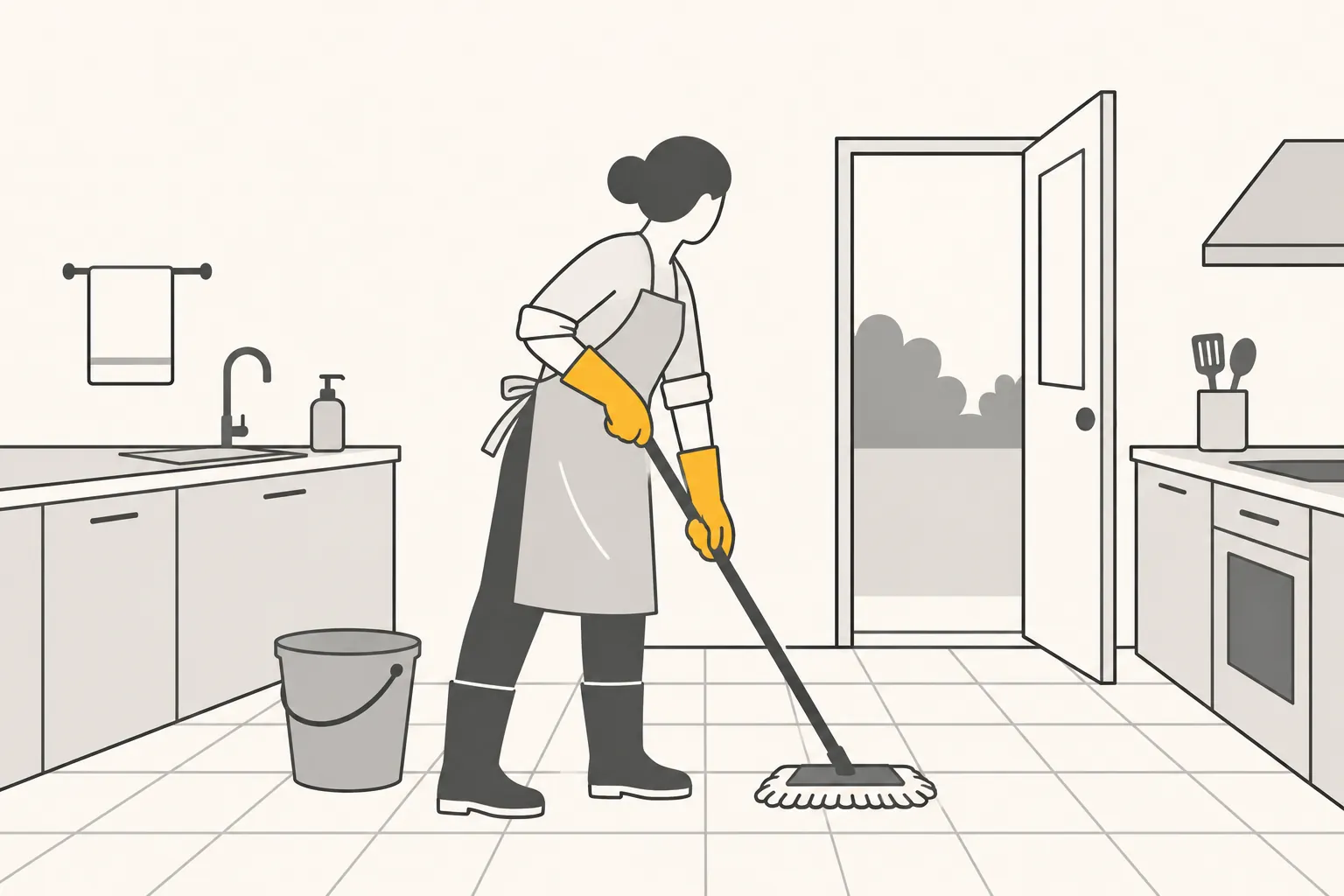
- Wear rubber boots, waterproof gloves and a plastic apron. If the work splashes a lot of water, wear a face mask. Clean any cuts and use waterproof plasters.
- Wash your hands with warm water and soap after each cleaning session and any contact with floodwater.
- Do not eat food that has touched floodwater. Throw away fridge food if the power has been off for more than 4 hours, and freezer food after more than 24 hours.
- Do not use petrol or diesel generators, or other fuel-driven equipment, indoors: they give off carbon monoxide.
- Keep young children off flooded grass and paving, and stop pets drinking floodwater.
- Sewage in the house: call Thames Water on 0800 316 9800. It aims to reach internal sewer flooding within 4 hours, though it may take longer in severe weather.
- Asbestos can be present in any building built or refurbished before 2000. Before you rip out damaged materials, ask the council how to check for asbestos and remove it safely.
Getting rid of the waste, once your insurer agrees
- Drayton recycling centre, Steventon Road, Drayton, OX14 4LA, is open every day from 8am to 5pm. Book a slot before every visit.
- Drayton does not take plasterboard: only the Redbridge and Ardley Fields centres do. DIY waste over a small free allowance is charged.
- The Vale's bulky waste collection costs a minimum of £62.50 for up to three items, and does not take DIY waste, fixtures or fittings.
Look after yourself
Anxiety, stress, tiredness and difficulty sleeping are normal after a flood. If you are struggling, see your GP or call NHS 111.
Step 4: Dry the house out
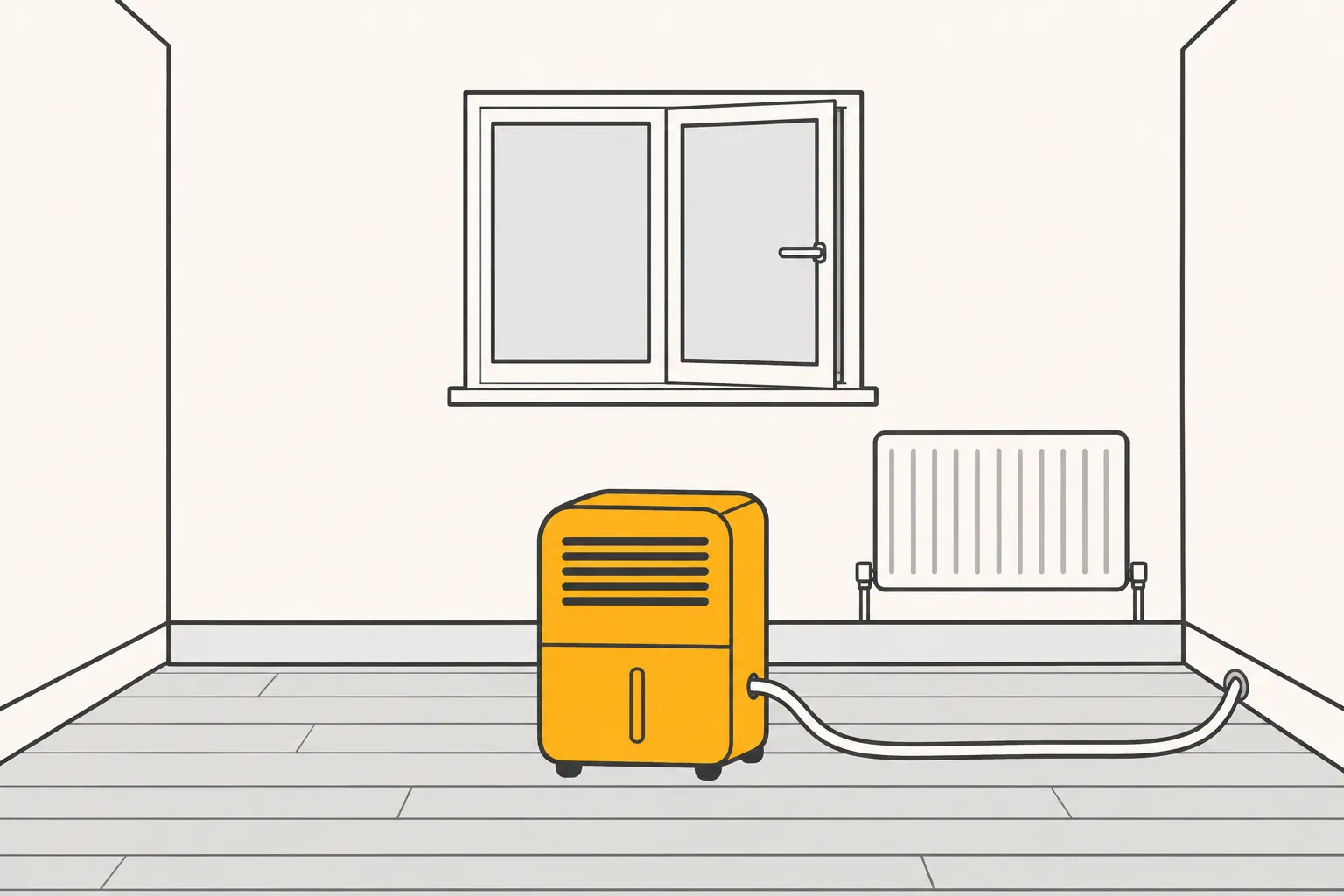
- Heating, dehumidifiers and good ventilation help a home dry out. Keep the thermostat between 20°C and 22°C for steady drying, and make sure air bricks are unblocked.
- If you are claiming, your insurer is likely to bring in specialists, which may include cleaning and drying companies. The electricity used for dehumidifiers may be covered by your policy.
- Drying can take from a few weeks to several months or more.
- Mould should disappear as the house dries. If it stays, contact a specialist cleaner.
A question to ask
Before anyone plasters, tiles or lays a floor, ask your insurer or the drying company how they will confirm that the walls and floors are dry.
Older and listed homes
Old and traditional buildings should be dried slowly and gently. Rapid drying can damage historic fabric. Do not remove lime plaster from the walls. New plaster should wait until a wall is thoroughly dry, which could take at least 12 months.
If the building is listed, ask the planning authority whether you need listed building consent before any stripping out or repairs start. For Abingdon that is the Vale of White Horse: planning, 01235 422600.
Step 5: Repairs, in order
Repairs usually go in this order, so that one job does not undo the last. It is the ordinary building sequence, not an official rule, and your loss adjuster or builder may change it.
1. Electrics tested, repaired or rewired
Electrician. Look them up with NICEIC or NAPIT, and ask for the certificate for the work.
Electricians in Abingdon (26 listed)2. Boiler, gas appliances and pipework
Gas Engineer. Check the Gas Safe Register and their ID card.
Gas Engineers in Oxfordshire (29 listed)4. Strip-out and building work
Builder & General Contractor. Look the firm up on Companies House, and get a written quote.
Builders & General Contractors in Abingdon (25 listed)5. Damp and timber assessment
Damp Specialist. Get a written quote.
Damp Specialists in Oxfordshire (8 listed)6. Plastering, once the walls are dry
Plasterer. Make sure the walls have been confirmed dry first.
Plasterers in Abingdon (5 listed)7. Doors, skirting and stairs
Carpenter & Joiner. Get a written quote.
Carpenters & Joiners in Abingdon (6 listed)9. Floors
Flooring Specialist. Make sure the subfloor is dry first.
Flooring Specialists in Abingdon (7 listed)10. Decorating
Painter & Decorator. Get a written quote.
Painters & Decorators in Oxfordshire (40 listed)
Each listing on TradesAround shows a Trust Score: an automated assessment of the business's Google reviews, Companies House record and TrustMark registration. It is a guide, not a guarantee. Trust Scores aren't for sale; Pro members are listed first, with a Pro badge. Check gas engineers on the Gas Safe Register, and electricians with NICEIC or NAPIT, yourself.
People who knock on the door
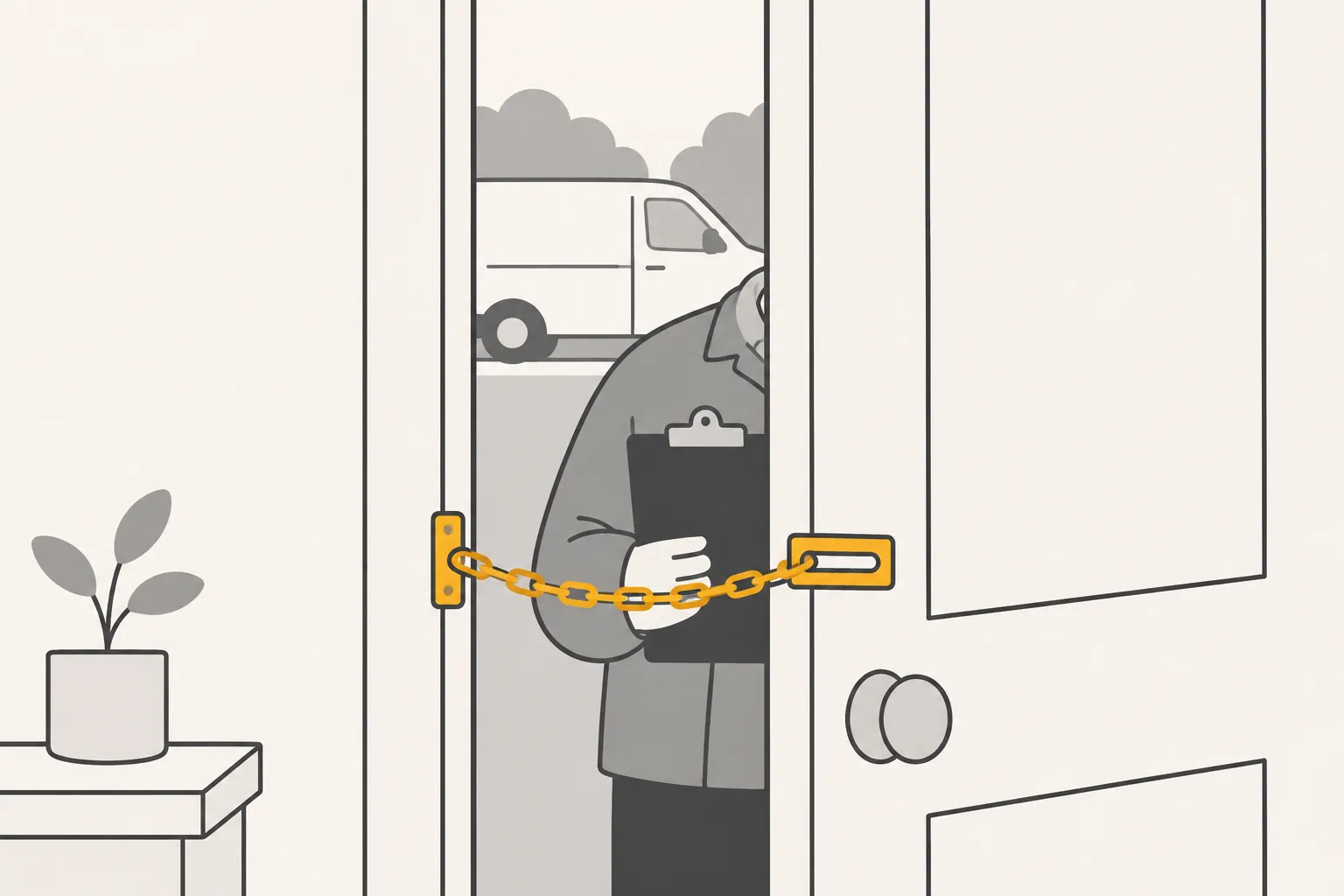
Oxfordshire County Council has warned that rogue traders see bad weather as the perfect opportunity to take advantage of residents who have flood damage.
- Do not agree to building work, repairs or maintenance offered through a cold call.
- Get written quotes from at least three different traders.
- Never pay the whole amount up front, and avoid paying cash. Do not agree to a deposit of more than 25%, and pay by debit or credit card if you can.
- If a business approached you away from its premises, for example at your door, and the service costs £42 or more, you get 14 days to cancel. If you invite a trader in for urgent repairs, you do not automatically get that cooling-off period.
- Two free checks anyone can run: look the business up on the Companies House register, and see whether it is TrustMark registered. TrustMark is the only government-endorsed quality scheme for work in or around your home.
Where to report
- A trader: the Citizens Advice consumer helpline, 0808 223 1133, Monday to Friday, 9am to 5pm. It passes reports on to Trading Standards.
- Fraud: Report Fraud, 0300 123 2040 or reportfraud.police.uk. It replaced Action Fraud on 4 December 2025.
- Threatened at the door: call 999. Other police matters: 101.
Help with the cost
Build Back Better. Some insurers will pay up to £10,000 towards flood resilience measures as part of a flood claim, so the home is better protected next time. Not every insurer offers it, and each sets its own limit, so ask yours when you make your claim.
Government flood grants. Ministers decide when to switch on the Flood Recovery Framework after a severe weather event; floods with local impacts do not usually trigger it. When it is on, councils run it: around £500 for each eligible household and a 100% council tax discount for at least three months. In January 2024 it also offered a Property Flood Resilience Repair Grant of up to £5,000.
In Oxfordshire, it ran for properties flooded by Storm Henk between 2 and 12 January 2024, and the Vale's applications closed on 18 March 2024. Today, the Oxfordshire Flood Toolkit says there are currently no grants available under the framework.
Council tax. The Vale stopped exempting uninhabitable homes on 1 April 2013. Ask its council tax team whether a discount applies to you.
Somewhere to stay. If flooding leaves you homeless, the council must give you emergency accommodation. In Abingdon, that is the Vale of White Horse: 01235 422422.
Who to call in Abingdon
Environment Agency
Main rivers, including the Ock and the Thames, and flood warnings. Report flooding from a main river on the incident hotline.
- Floodline, 24 hours
- 0345 988 1188
- Incident hotline, 24 hours
- 0800 80 70 60
Oxfordshire County Council
The lead local flood authority: roads, drains and ditches, and flood investigations.
- Flooded roads
- 0345 310 1111
- Groundwater, surface water, small streams
- Online form, not for emergencies
Vale of White Horse District Council
Abingdon's district council: emergency helpline, council tax, housing, bulky waste, planning and listed buildings.
- Main number
- 01235 422422
- Emergency helpline, out of hours
- 01235 422420
- Planning
- 01235 422600
Abingdon-on-Thames Town Council
Has an emergency planning guide. Flood defences, warnings and emergencies are coordinated by the Environment Agency.
Local flood groups
The Ock Valley Flood Group raises awareness of flood risk from the River Ock and the Sandford Brook.
- Find a group
- The county's list of local flood groups
Flooding in Abingdon
The River Ock, the Thames, the River Stert and the Sandford Brook all contribute to flooding in Abingdon. The floods of 2024 around Nash Drive came mainly from the River Ock and the Sandford Brook.
Flood warnings for Abingdon
The Environment Agency's flood warning service is free, by phone, text or email. Sign up for the areas that cover your street. Each area below links to its live status.
| Type | Area |
|---|---|
| Flood warning | River Ock at Abingdon and Caldecott |
| Flood warning | Properties closest to the River Ock from Tesco to St. Helen's Wharf |
| Flood warning | River Thames in Abingdon |
| Flood warning | River Stert at Abingdon |
| Flood alert | River Ock from Watchfield to Abingdon, and also the Letcombe Brook at Wantage, Grove and East Hanney |
| Flood alert | River Thames for the Abingdon area |
| Flood alert | River Stert in Abingdon |
River level. On the River Ock gauge at Abingdon, property flooding is possible above 1.31 m. The normal range is 0.08 m to 0.84 m, and the highest level recorded is 1.81 m, on 22 July 2007.
What has happened before
| When | What the official record says |
|---|---|
| 25 to 26 November 2024 | About 30 properties flooded inside again in Nash Drive, Orpwood Way and Chaunterell Way. Tesco, across the river, flooded and shut. |
| 24 to 26 September 2024 | About 30 properties flooded inside in the same streets after heavy rain on 22 and 23 September, mainly from the River Ock and the Sandford Brook. |
| 5 to 6 January 2024 | At least 16 homes flooded inside in Nash Drive, Orpwood Way and Chaunterell Way, and one in nearby Francis Little Drive. |
| 2014 | The same area flooded. |
| July 2007 | Over 400 residential and 20 commercial properties flooded inside. |
Sandbags and defences
The Vale does not supply sandbags, and the county council will not provide them where flooding is from rivers or groundwater. The Town Council has an emergency planning guide: ask it what is in place for your street.
The county council's February 2025 report says flood alleviation schemes have been assessed by the Environment Agency and found not to be viable.
Make the repair count
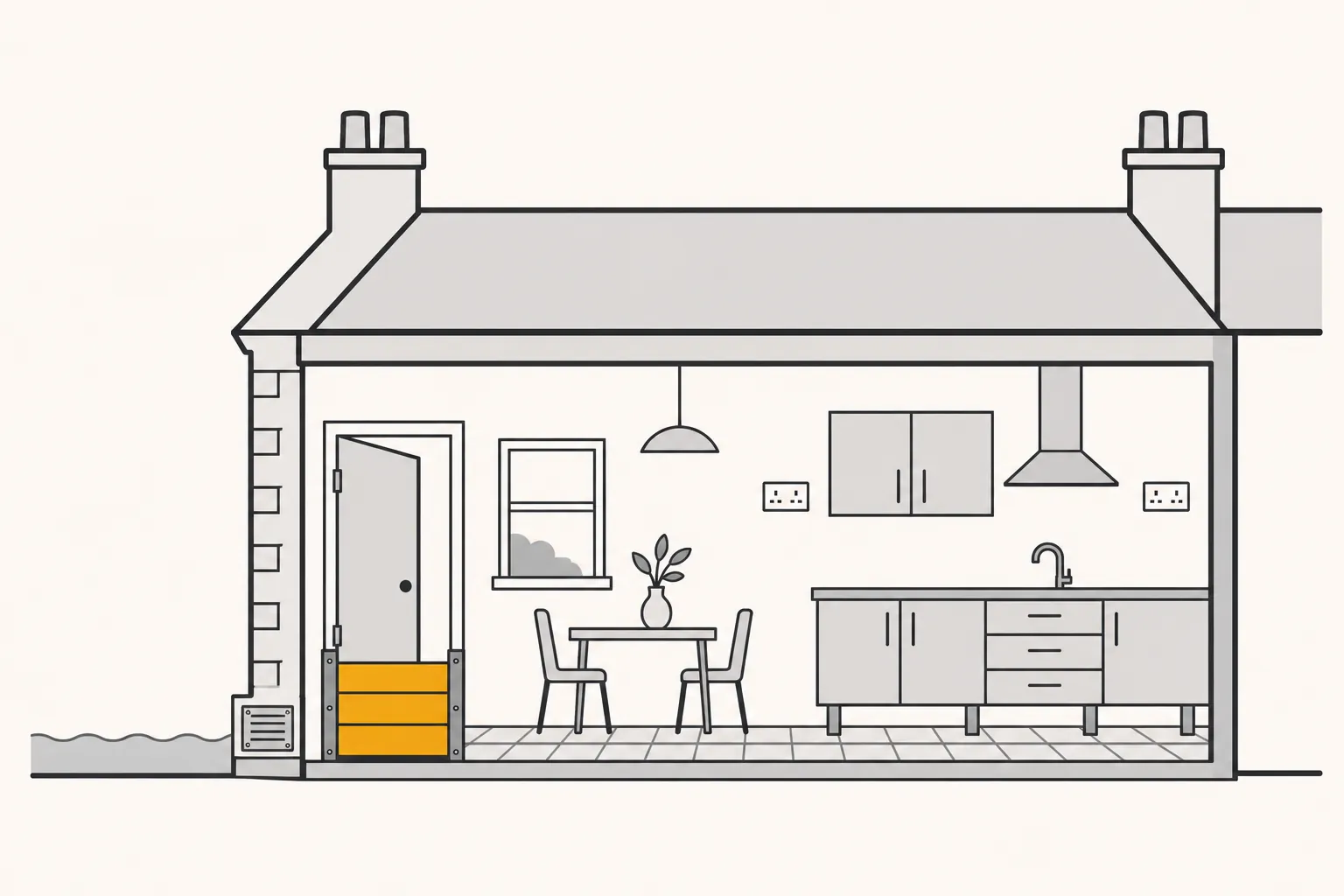
Repairs are a chance to make the next flood less damaging. Ask your insurer about Build Back Better before you agree to like-for-like repairs.
- Tiles instead of carpets.
- Electrical sockets moved higher up the wall.
- Non-return valves, to stop floodwater coming in through the drains.
- Flood doors and self-closing air bricks.
The Environment Agency's guidance adds more: plasterboard fitted horizontally, or lime-based plaster instead of gypsum; water-resistant skirting boards; kitchens in water-resistant materials such as stainless steel, plastic or solid wood; appliances raised on plinths; and sockets, fuse boxes and wiring raised to at least 1.5 metres.
Sign up for free flood warnings so you get notice next time. For how to prepare, see GOV.UK: prepare for flooding.
Common questions
Is it safe to switch the electricity back on after a flood?
Not until it has been checked. Avoid using mains appliances until a registered electrician says it is safe: water in downstairs sockets can make the whole system unsafe.
Can I use my boiler after a flood?
Not until a Gas Safe registered engineer has checked the pipework for water and given the boiler a full safety check. Oil-fired heating should be checked by a qualified engineer too.
Should I throw away flood-damaged carpets and furniture?
Not until your insurer agrees. Photograph everything, and keep damaged items until the loss adjuster says they can go, unless they are a health hazard.
How long does a flooded house take to dry?
From a few weeks to several months or more. In an older home, new plaster could need to wait at least 12 months.
Does the council give out sandbags in Abingdon?
The Vale does not supply them, and the county council will not provide them for river or groundwater flooding. Ask the Town Council what is in place for your street.
Are there grants for flooded homes in Abingdon?
Not at the moment: the Oxfordshire Flood Toolkit says none are currently available under the Flood Recovery Framework. Ask your insurer whether your policy includes Build Back Better.
Who do I call about sewage in my house in Abingdon?
Thames Water, on 0800 316 9800, 24 hours a day. It aims to reach internal sewer flooding within 4 hours.